
Why Are We So Obsessed with Surface-Level Things?
If I’m being honest, this blog was born out of irritation.
I often find myself deeply uncomfortable when people hyper-focus on someone’s body. Comments like, “You look great — you’ve lost weight,” or “You look so skinny,” are said as compliments. But underneath them is an unsettling implication: So when I wasn’t skinny, was I not worthy? Was I not great?
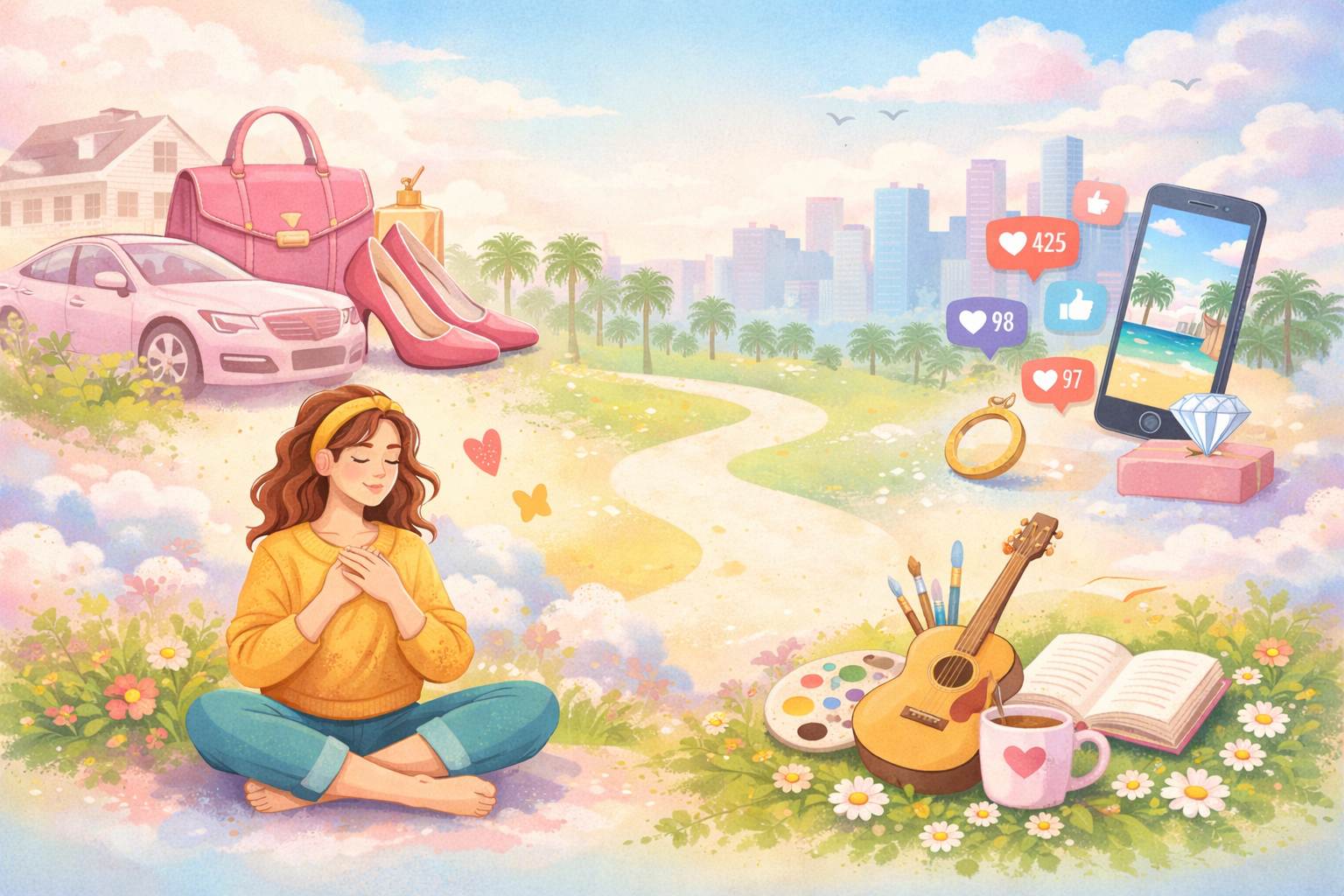
We live in a society that places enormous value on appearance — filters, angles, curated feeds, designer labels, cars, homes, status symbols. And while this culture is everywhere, I do notice it acutely living and working in the Los Angeles area. In places like Westlake Village, Calabasas, Agoura Hills, Thousand Oaks, and Los Angeles, image can quietly become currency. But this isn’t just a Southern California issue — social media has made it global.
As a trauma therapist providing individual therapy and relationship therapy in California (both in-person sessions and online sessions), I see firsthand how this obsession with surface-level things impacts mental health.
Let’s talk about why.
The Evolutionary Need to Belong
From an evolutionary perspective, belonging equals survival. Being cast out from the group once meant danger. So it makes sense that we care about fitting in.
Social media has hijacked that wiring.
Now, trends move at lightning speed. Pop culture shifts overnight. A new aesthetic, body type, lifestyle, or belief system becomes the thing — and suddenly, not aligning with it can feel isolating. Even threatening.
Think about a time you felt different.
Was it uncomfortable?
Did it feel lonely?
Did you shrink yourself to fit in?
Many of the clients I work with in trauma-informed care — especially those healing from emotional abuse, narcissistic abuse, or sexual abuse — learned early on that belonging (and safety) required adaptation. Sometimes that meant becoming hyper-aware of how they looked, how they dressed, how they performed.
Surface-level perfection can become armor (or a false sense of one).
Social Media and the Highlight Reel Illusion
So much of life today is lived for the post.
A photo captures a curated moment — the vacation, the outfit, the relationship milestone. But that one image doesn’t show the anxiety, the grief, the self-doubt, or the trauma underneath.
In trauma therapy, we often unpack the painful comparisons clients make:
-
Why don’t I look like that?
-
Why don’t I have that life?
-
Why am I behind?
The nervous system does not differentiate between “real” and “highlight reel.” Comparison activates threat. It activates shame. It can even trigger trauma responses — fight, flight, freeze, or fawn.
This is where modalities like EMDR therapy and somatic trauma therapy become powerful. We work not just cognitively, but through the body, helping regulate the nervous system and reprocess core beliefs such as “I’m not enough” or “I have to look a certain way to be loved.”
The Cost of Surface-Level Living
When we overly invest in appearance and external validation, it often comes at the expense of internal alignment.
In my work as a psychotherapist, I frequently integrate dialectical behavior therapy (DBT), mindfulness, and Acceptance and Commitment Therapy (ACT). One exercise I often guide clients through is identifying core values.
Because here’s the thing:
Designer bags are not values.
A certain body type is not a value.
A perfectly curated social media presence is not a value.
Values are things like:
-
Community
-
Creativity
-
Authenticity
-
Kindness
-
Growth
-
Family
-
Music
-
Spirituality
-
Justice
-
Play
When we clarify values, we can ask:
Are my actions aligned with what truly matters to me?
If community is a value, maybe the aligned action is attending one social gathering every other week.
If creativity is a value, maybe it’s setting aside time to paint or write.
If authenticity is a value, maybe it’s wearing the colorful, comfortable clothes that actually feel like you — not what trends dictate.
This is the shift from surface-level living to embodied living.
Trauma and the Performance of Perfection
For many people, the obsession with appearance is not superficial — it’s protective.
If you grew up in environments where love was conditional, where criticism was constant, or where abuse shaped your self-worth, you may have learned that being “perfect” was safer than being real (or attaining perfection would protect you from something).
In EMDR therapy, we often target memories linked to beliefs like:
-
“I am only valuable if I look good.”
-
“If I don’t fit in, I’ll be rejected.”
-
“My worth depends on others’ approval.”
Through somatic trauma therapy and mindfulness practices, we help the body experience safety without performance.
Because true safety isn’t found in a number on a scale or a status item.
It’s found in self-acceptance.
Shifting the Conversation
So here’s the invitation.
What if instead of saying:
-
“You look skinny.”
-
“You look better.”
-
“You look expensive.”
We said:
-
“You’re such a kind person.”
-
“I love how creative you are.”
-
“You bring so much warmth into a room.”
-
“I admire your courage.”
Physical attributes are fleeting. Bodies change. Trends shift. Youth fades. Algorithms evolve.
But relational qualities endure.
If you find yourself stuck in cycles of comparison, perfectionism, or external validation — pause. Reflect. Notice what this preoccupation is costing you emotionally and physically.
You are living in a rapidly changing world. The internet, pop culture, and social media have accelerated everything. It’s a lot for a human nervous system to process.
Come back to your values.
Come back to what feels true.
Come back to what brings real joy — not performative joy.
If you’re struggling with the deeper roots of these patterns — whether connected to emotional abuse, narcissistic abuse, or other forms of trauma — support is available. I offer individual therapy, relationship therapy, EMDR therapy, and trauma-informed care both in-person in Westlake Village and surrounding areas, and through online sessions across California.
Surface-level things will always exist.
But you don’t have to build your identity around them (or get caught up in the “pop trends”).
Your worth has never been skin deep.