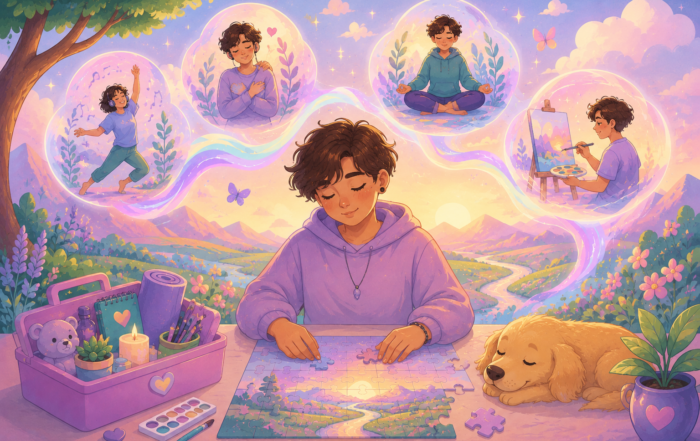
The Feeling of Inner Peace and Calm Is Available to You at Any Moment
In my work as a trauma therapist, there is something I often wish more people knew: the feeling of inner peace and calm is available to you more often than you might think. Many people assume that peace is something that only appears once life is “fixed” — once the stress is gone, once relationships are healed, once the world feels predictable again. But the truth is that calm can exist even in the middle of uncertainty.
In today’s world, it can feel very easy to become overwhelmed. The news cycle is heavy. Many people are still carrying the emotional impact of the pandemic, personal trauma, or difficult life transitions. It’s common for people to feel stuck in sadness, anxiety, or a sense that nothing is going right.
In my individual therapy sessions with clients across Westlake Village, Thousand Oaks, Agoura Hills, Calabasas, Oak Park, Ventura, Los Angeles, and throughout California, I see how common this experience has become. Many people feel like they are constantly in survival mode.
Yet even in the midst of hardship, we can still cultivate moments of calm, hope, and meaning.
Before going further, there is an important distinction to make. If you are in a situation where your safety is threatened — such as emotional abuse, sexual abuse, narcissistic abuse, or any other unsafe environment — your safety must come first. Establishing physical and emotional safety is the priority. Inner calm is not meant to replace taking action to protect yourself.
However, once safety is established, or if you are already in a safe environment, learning how to access moments of peace becomes an incredibly powerful skill for healing.
Why Our Minds Tend to Focus on the Negative
The human brain is designed to scan for threats. This is part of our survival system. When someone experiences trauma, the brain often becomes even more vigilant.
Many symptoms associated with trauma — such as hypervigilance, anxiety, and intrusive thoughts — are actually attempts by the nervous system to protect you. In conditions like PTSD, the brain is trying to process what happened and prevent future danger.
From a trauma-informed care perspective, these responses make sense. Your mind and body are not “broken.” They are trying to keep you safe.
However, when this threat-detection system stays activated for too long, it can begin to shape how we see the world. We may start to focus almost exclusively on what is wrong, dangerous, or painful.
Over time, people can lose their ability to stay present. They may stop noticing the beauty that still exists around them — nature, connection, laughter, creativity, adventure, or simple moments of quiet.
This is when life can begin to feel heavy or hopeless.
The Void Many Trauma Survivors Experience
Another experience many trauma survivors describe is a feeling of emptiness or a “void.” This can develop when someone has experienced emotional abuse, neglect, or chronic stress.
That emptiness can create a sense that something is missing — and people may try to fill it through external sources such as work, relationships, substances, or constant activity. Many people feel like they cannot sit still or relax because they feel an urge to keep doing something.
But healing often involves learning something different: discovering that calm and completeness can come from within.
In my work providing EMDR therapy, somatic trauma therapy, mindfulness practices, and dialectical behavior therapy, one of the first things I help clients learn is how to reconnect with their nervous system’s natural capacity for regulation.
This means learning how to access moments of calm within the body and mind — even if life is still unfolding and uncertainty remains.
Allowing Yourself to Experience Peace
For some people, the biggest barrier to inner calm is the belief that they do not deserve it.
Many trauma survivors carry unconscious beliefs such as:
-
“I don’t deserve happiness.”
-
“Something bad will happen if I relax.”
-
“Peace isn’t available to me.”
These beliefs often develop after long periods of hardship. When someone has lived in chaos or stress for years, calm can feel unfamiliar or even uncomfortable.
Part of healing in trauma therapy involves gently challenging these beliefs.
Joy is allowed.
Peace is allowed.
Play is allowed.
Regulation is necessary.
When people begin to experience moments of calm, something powerful happens: they become better able to navigate life’s challenges without feeling overwhelmed by every obstacle.
Inner peace does not mean life is perfect. It means your nervous system has enough stability to move through life without constantly feeling threatened.
Cultivating Calm in Everyday Moments
Sometimes people believe that peace requires meditation retreats or major life changes. But often, it begins with small moments of awareness.
You might start by asking yourself:
What would it feel like to feel calm in this moment, right now?
Even if your life is complicated, there may still be a moment of quiet available to you — the sound of birds outside, the feeling of breathing, the warmth of sunlight, or simply noticing that you are safe in this moment.
Mindfulness practices and loving-kindness meditation can also help cultivate a sense of compassion toward yourself and others. These practices help people reconnect with a sense of belonging and connection in the world.
Over time, these small moments of calm can become the foundation for deeper healing.
Therapy Can Help You Reconnect With Inner Peace
Healing from trauma does not mean pretending everything is okay. It means learning how to process painful experiences while also reconnecting with your natural capacity for peace and regulation.
Through approaches like EMDR therapy, somatic trauma therapy, mindfulness, and dialectical behavior therapy, many people learn that calm is not something they need to earn — it is something that can be rediscovered.
If you are struggling with trauma, anxiety, or the effects of narcissistic abuse, emotional abuse, or sexual trauma, support is available.
I am Valeriya Bauer, a psychotherapist offering trauma therapy, relationship therapy, and individual therapy for adults seeking healing and personal growth. Sessions are available through online sessions throughout California and in-person sessions in Westlake Village, Agoura Hills, Thousand Oaks, and surrounding Los Angeles areas.
Even if life feels overwhelming right now, it is still possible to reconnect with moments of calm.
And sometimes, healing begins with realizing that peace may be closer than you think.