
The Invisible Addictions
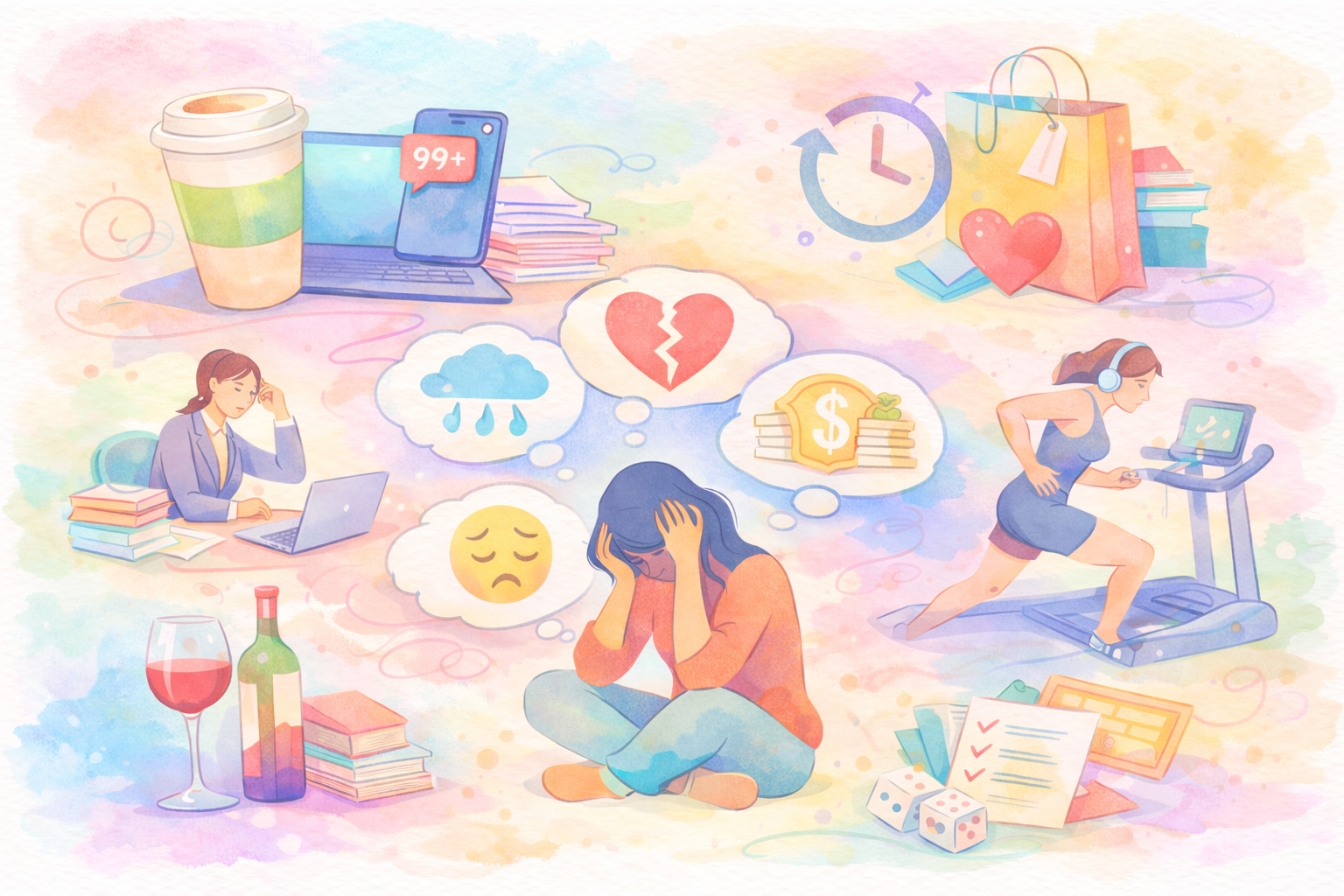
When we think about addiction, most of us picture the obvious ones: alcohol, hard drugs, gambling. These are the addictions that tend to get the most attention in conversations, research, and even in trauma therapy. But there are other forms of addiction that are far more subtle — and often far more socially accepted.
These are what I call the invisible addictions.
They can look like caffeine dependence. Work addiction. Busyness. Shopping. Over-exercising. Even people-pleasing or relationship fixation. In many ways, our culture rewards these patterns. We praise productivity. We normalize exhaustion. We joke about needing coffee to survive. We admire hustle.
And yet, something being common does not mean it is healthy.
In my own healing journey and working as a psychotherapist, I have rarely met someone who has not struggled with at least one form of addictive behavior in their lifetime.
This does not mean addiction is “normal” in the sense that it is okay or healthy. But it is common. Our brains are wired for reward. When something temporarily reduces discomfort, stress, or pain, the brain takes note.
And that’s the key: addiction almost always serves a purpose.
Addiction as a Coping Strategy
I don’t believe addiction comes from nowhere. It is usually an attempt to cope.
Are you feeling anxious about the future? You may overwork to feel secure.
Are you feeling socially anxious? You may drink to ease your nerves.
Are you feeling unworthy or unseen? You may seek validation through relationships.
Are you carrying trauma around money or scarcity? You may compulsively hustle.
Often, addiction is an attempt to regulate the nervous system or emotions.
In somatic trauma therapy, we explore how behaviors are often strategies the body learned to survive. In EMDR therapy, we may uncover unresolved memories or beliefs that drive compulsive patterns. Through dialectical behavior therapy (DBT) and mindfulness, clients learn to tolerate distress without escaping it.
Underneath addiction is usually an unprocessed feeling:
-
Shame
-
Anxiety
-
Grief
- Pain
-
Trauma
-
Emotional neglect
-
Experiences of emotional abuse or sexual abuse
-
Even patterns tied to narcissistic abuse
Many people coping with addiction also experience ADHD, anxiety, or other disorders. The overlap is real. Stimulation-seeking, impulsivity, or chronic dysregulation can increase vulnerability to addictive behaviors.
The behavior itself is rarely the whole story.
So How Do You Know If It’s a Problem?
Addiction exists on a spectrum. Some habits are mild. Others begin to take over your life. One helpful framework comes from the diagnostic criteria for Substance Use Disorder (SUD), which includes patterns such as:
-
Using more of a substance (or engaging in a behavior) than intended
-
Unsuccessful attempts to cut down or quit
-
Spending significant time obtaining, using, or recovering from it
-
Cravings or strong urges
-
Continued use despite relationship, financial, or health consequences
-
Withdrawal symptoms when stopping
-
Tolerance (needing more to get the same effect)
Even when we’re not talking about substances, these patterns can apply to “invisible” addictions as well.
Some warning signs to consider:
1. Difficulty coping with distress in healthy ways.
When you feel stressed, anxious, sad, or overwhelmed, can you regulate through breathing, journaling, movement, or reaching out for support? Or do you automatically check out, dissociate, scroll, drink, shop, or overwork?
2. Repeated failed attempts to stop.
Have you told yourself, “I’ll cut back,” only to return to the same pattern?
3. Obsessive thinking or preoccupation.
When you try to stop, do you think about it constantly? Does it feel compulsive?
4. Mood swings or irritability.
Do you feel emotionally volatile when you don’t engage in the behavior?
5. Consequences in other areas of life.
Has this habit affected your finances, your relationships, your work performance, or your health?
When the consequences repeatedly outweigh the benefits (and affect your life in negative ways), it’s time to look at what may be going on.
A Trauma-Informed Perspective
From a trauma-informed care lens, addiction is not a moral failure. It is not about willpower. It is not about weakness.
It is often about pain.
Many individuals who seek trauma therapy with me — whether in Ventura, Los Angeles, or virtually across California — discover that what they thought was “just a bad habit” is actually tied to unresolved trauma or pain.
Sometimes it is overt trauma like sexual abuse or emotional abuse. Other times, it is subtle attachment wounds, chronic stress, or relational instability. In relationship therapy, we often uncover how addictive dynamics play out between partners — cycles of pursuit, withdrawal, validation-seeking, or emotional numbing.
When we gently explore what the addiction is protecting you from feeling, we begin to access real healing.
Bringing Awareness Without Shame
If you recognize yourself in this blog, I encourage you not to shame yourself.
Instead, get curious.
Take inventory:
-
Do you overexercise?
-
Overwork?
-
Rely heavily on caffeine?
-
Shop impulsively?
-
Stay constantly busy to avoid stillness?
Ask yourself:
What am I trying not to feel? If you don’t know, is there an inkling that there may be something underneath that you are avoiding?
Healing is not about ripping away coping mechanisms overnight. It is about slowly building healthier tools. Through mindfulness practices, DBT skills, EMDR therapy, and somatic approaches, you can learn to regulate your nervous system without relying on compulsive patterns.
Addiction may be common. But it does not have to run your life.
If you’re ready to explore the roots of your patterns in a compassionate, structured, and trauma-informed space, working with a therapist can help you move from coping to healing.
—
Valeriya Bauer, Psychotherapist
Serving Westlake Village, Thousand Oaks, Agoura Hills, Calabasas, Oak Park, Ventura, Los Angeles, and clients across California via online sessions.