
Let’s Talk About Religious Trauma
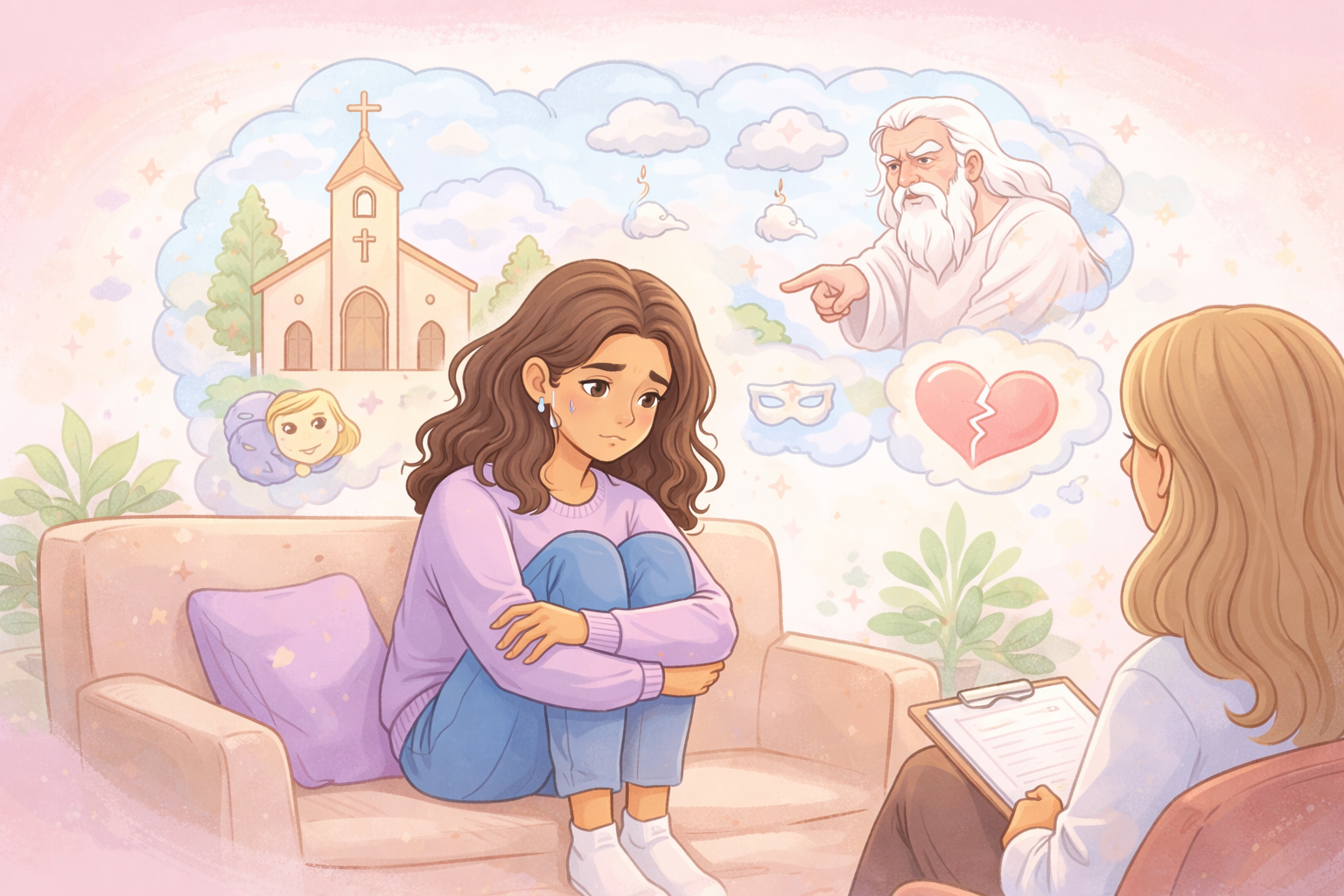
So many of us have been affected—directly or indirectly—by religious trauma or cultural trauma. In my work as a trauma therapist, I often begin treatment focused on one specific issue, only to uncover that religious trauma is actually at the core of much of the shame, guilt, and internal conflict a client carries. It is frequently the unseen root of anxiety, relationship struggles, and deep self-judgment.
Religious trauma is not always obvious. It can be subtle, normalized, and deeply embedded in belief systems that were taught early and reinforced over time. Let’s unpack why religious trauma can be so impactful, how it shows up in therapy, and how healing is possible through trauma-informed care.
What Is Religious Trauma?
Religious trauma refers to the psychological and emotional harm caused by rigid, fear-based, or abusive religious systems or teachings. This can include experiences rooted in shame, guilt, punishment, fear of wrongdoing, emotional abuse, sexual abuse, or narcissistic abuse within religious or spiritual settings.
For many people, these teachings were introduced during formative years—when the brain and nervous system were still developing. As a result, these messages don’t just live as thoughts; they become embodied beliefs about safety, worth, and goodness.
Why Religious Trauma Creates So Much Shame and Guilt
A significant reason religious trauma cuts so deeply is the over-fixation on good versus bad, often paired with punishment for deviating from prescribed norms. On the surface, this may sound reasonable. Human behavior does require boundaries and ethical frameworks.
However, problems arise when:
-
Rules are arbitrary, outdated, or rigid
-
There is no room for curiosity, nuance, or human complexity
-
Normal human experiences are labeled as sinful or dangerous
When someone is taught that benign or developmentally normal behaviors make them “bad in the eyes of God,” shame becomes internalized. Over time, people stop questioning the rules and start questioning themselves.
Fear-Based Teachings and the Body
Many religious systems rely on fear as a primary motivator—fear of punishment, fear of rejection, fear of eternal consequences. These teachings activate the nervous system in the same way other traumatic experiences do.
From a somatic trauma therapy perspective, fear-based belief systems can keep the body in a chronic state of hypervigilance. This may show up as:
-
Anxiety or panic
-
Difficulty trusting oneself
-
Trouble relaxing or experiencing pleasure
-
Disconnection from bodily cues and emotions
This is where mindfulness, EMDR therapy, and somatic approaches can be especially helpful—because religious trauma often lives not just in memory, but in the body.
Sexuality, Control, and Conflicting Messages
One common theme I see in individual therapy is the way religious trauma intersects with sexuality. In many cultures and religions, sex is framed as dangerous, shameful, or morally wrong—particularly for women.
When someone is taught for most of their life that sex is bad or sinful, it is unrealistic to expect them to suddenly feel safe, connected, or embodied in adulthood. This creates:
-
Sexual shame
-
Difficulty with intimacy
-
Conflict in relationship therapy
-
Disconnection from desire and pleasure
These patterns are not character flaws—they are trauma responses.
Hypocrisy and Double Standards in Religious Systems
Another painful aspect of religious trauma is hypocrisy. Many clients report environments where:
-
Authority figures were protected
-
Harm was minimized or ignored
-
Accountability was selective
This dynamic mirrors other forms of emotional abuse and can deeply erode trust—not only in institutions, but in oneself. When harm is dismissed in the name of faith, the nervous system learns that safety is conditional.
The Myth of the Punishing God
A recurring theme in religious trauma is the image of a punishing, watching God—one who monitors every thought and action. This belief can become internalized as a harsh inner critic.
What is often missing is the idea of a compassionate, forgiving presence that allows for mistakes, growth, and learning. Without that, people don’t just fear punishment—they fear being inherently bad.
Can Religion Be Healthy?
Yes—religion can be healthy. Healing often begins when belief systems shift from rigid rules to values-based frameworks. When religion emphasizes compassion, accountability, consent, humility, and growth rather than fear and blind obedience, it can be supportive rather than traumatic.
The issue isn’t spirituality itself—it’s dogma that goes unchecked, systems that refuse to evolve, and teachings that shame rather than support.
Healing Religious Trauma in Therapy
Healing religious trauma often involves:
-
Trauma-informed care that honors your lived experience
-
EMDR therapy to process deeply held beliefs and memories
-
Dialectical behavior therapy (DBT) to work with guilt, shame, and emotional regulation
-
Mindfulness to rebuild self-trust
-
Somatic work to help the body feel safe again
Whether through online sessions or in-person sessions, trauma therapy can help untangle belief systems that no longer serve you.
Religious Trauma Therapy in California
As a trauma-focused psychotherapist, Valeriya Bauer provides trauma therapy, EMDR therapy, and relationship therapy for individuals navigating religious trauma, emotional abuse, and complex trauma. Services are available throughout Westlake Village, Thousand Oaks, Agoura Hills, Calabasas, Oak Park, Ventura, Los Angeles, and across California, both online and in person.
➡️ You are allowed to question what you were taught. You are allowed to redefine meaning. And yes, you are allowed to heal.